
Chimpanzee Trekking in Africa
Chimps in Africa
Trekking through East Africa’s stunning ecosystems to see chimpanzees is an exciting adventure. Chimpanzee trekking is a joyful experience, as many have confirmed. Watching these amazing apes feed and play in lush forests is a true delight for nature lovers.
What is a chimpanzee?
A chimpanzee is an African great ape with short legs, long arms, and black hair all over its body. This hair covers almost its entire body, except for its fingers, toes, ears, and face.
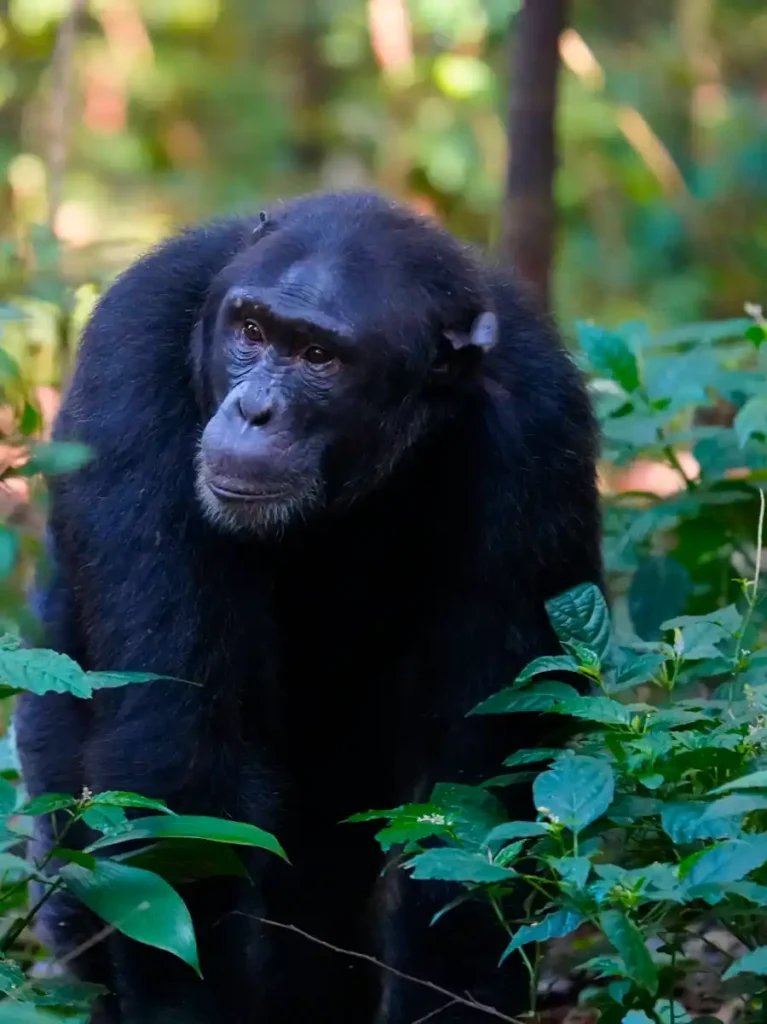
Chimpanzees are our closest living relatives. Their genes have 95 percent similarity to ours. Chimps are more like us than gorillas.
- Chimpanzees
- Gorillas
- Bonobos (pygmy chimpanzees) are all part of the African great ape family. Orangutans are also apes; they live in Southeast Asia. We must protect these species for the future. They risk extinction because of illegal activities in nearby communities.
Chimpanzee Brief Facts
Species: The chimpanzee, or Pan troglodytes, has four subspecies:
- Western Chimpanzee (Pan troglodytes verus)
- Nigeria-Cameroon Chimpanzee (Pan troglodytes vellerosus)
- Central Chimpanzee (Pan troglodytes troglodytes)
- Eastern Chimpanzee (Pan troglodytes schweinfurthii)
Conservation Status: Since 1996, the IUCN has listed chimpanzees as endangered. It’s estimated that fewer than 300,000 chimpanzees live in the wild.
All apes face serious threats from humans. These threats have led to a population decline. But many conservation efforts aim to protect them in their natural habitats.
Habitat: Chimpanzees inhabit Africa’s tropical and subtropical moist evergreen forests. They also thrive in semi-deciduous and montane forests. Some occupy swamp forests, savanna woodlands, and lowland forests.
Range: These great apes are native to the forested regions of West, Central, and East Africa.
Weight and Size: A chimpanzee can weigh up to 70 kilograms and usually grows to about 5.5 feet tall.
Life Span and Gestation: In the wild, chimpanzees can live up to 50 years. Those in captivity may reach 60 years. Their gestation lasts 6 to 8 months.
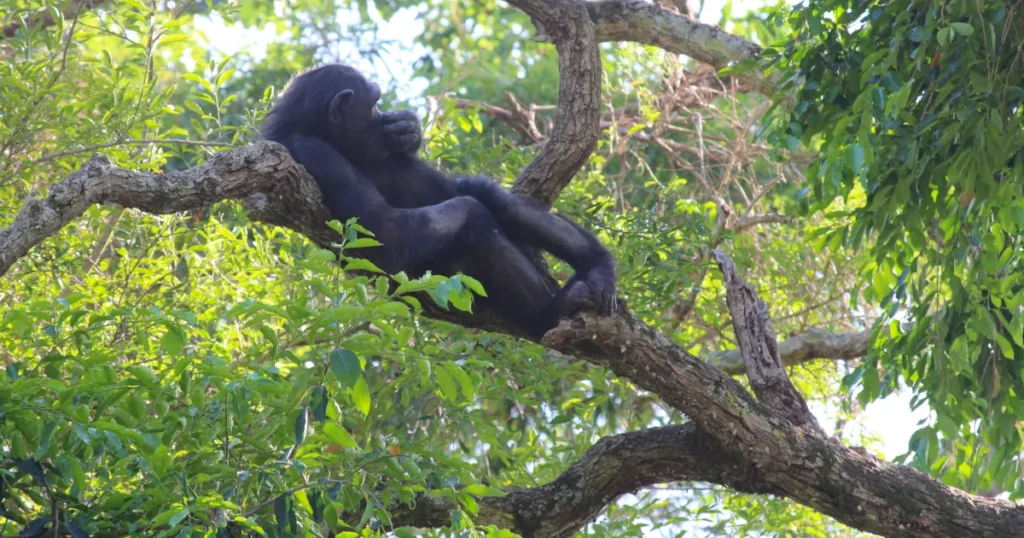
Where are Chimpanzees found in Africa?
Chimpanzees are in 21 African countries, but have lived in 25. Researchers think they have gone extinct in 4 countries. Chimps in Uganda are promising. It’s important to note that they are at risk in other countries that do not focus on conservation.
Central and East African countries with Eastern Chimpanzee populations include.
- Burundi
- Central African Republic
- Rwanda
- DRC
- South Sudan
- Uganda and Tanzania.
What is chimpanzee trekking?
A safari involving moderate to tough walks in ancient African forests to find chimps.
During the activity, visitors meet chimpanzee communities used to human presence.
Chimpanzee habituation means getting these communities comfortable with humans. When chimpanzees are habituated for tourism or research, they no longer shy away. This helps tourism but can also put them at risk of poaching and trafficking for zoos.
Conservation efforts near wildlife parks have reduced poaching and habitat destruction. As a result, chimpanzee populations are recovering at a slow rate.
Conservation Efforts
Local and international partners are working on conservation in areas with great apes. Civil wars in Central Africa have affected ape populations. Some species are now near extinction.
Surrounding communities learn about the benefits of conserving these great apes. Chimpanzee tourism helps fund important infrastructure. This includes roads, clean water, hospitals, and schools near the parks. Tourist fees help fund these conservation efforts. Explore the idea of booking a trekking safari to see and help chimpanzees and gorillas in Uganda.
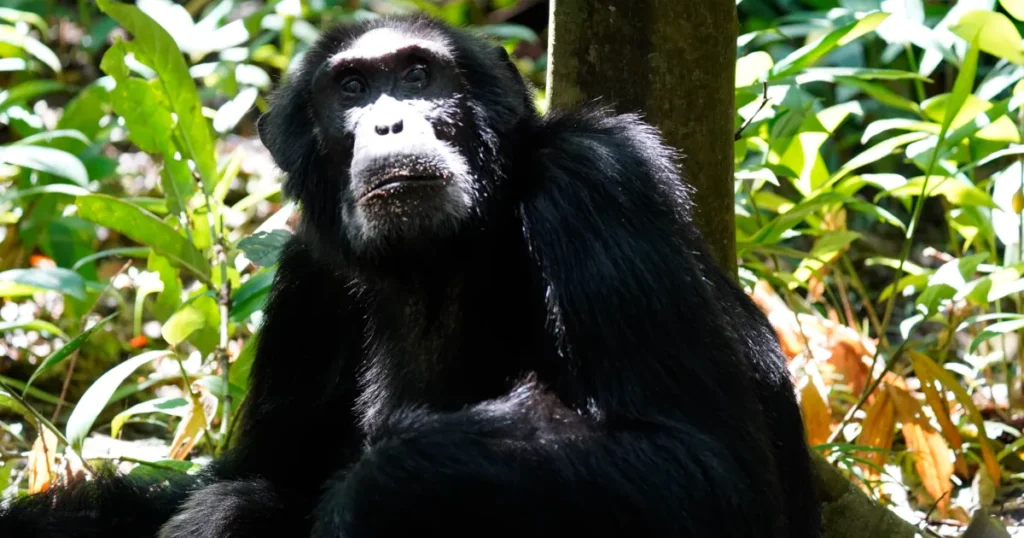
Strict conservation measures in East Africa have been vital for keeping apes in the wild. Many organizations, like.
- Wildlife Conservation Society (WCS)
- African Wildlife Foundation (AWF)
- Flora and Fauna International (FFI)
The above organizations have done much to protect wildlife.
Why Chimps in Uganda?
Chimpanzee conservation is at its best in Uganda. Several forest reserves protect this endangered species. Chimpanzee trekking involves many stakeholders, including travel, security, and chimp trekking accommodation. Uganda has many chimpanzee groups and better trekking facilities than other countries.
In Africa, chimps roam the wilderness, unlike in zoos in America or Europe. Uganda is the top spot to see chimpanzees. It has many safe reserves for their protection.
The Uganda Wildlife Authority (UWA) protects wildlife in national parks and game reserves. They do an excellent job.
Uganda has more than 5000 chimpanzees. The top gazetted places for chimpanzee trekking include
- Kibale forest
- Budongo Forest Reserve
- Kyambura gorge
- Kalinzu forest
- Ngamba island
- Toro Semliki Wildlife Reserve.
Kibale National Park is the prime destination to see chimps during a Uganda safari.
Chimp Trekking Expectations
Walking to see chimpanzees in a forested park is a thrilling African safari activity. It requires planning and commitment. Mountain gorillas are rare, making them a top choice. But chimp trekking is a popular second option.
Trekking can range from moderate to challenging, depending on the terrain and weather. Expect easy to difficult levels during chimpanzee tours. Habituated chimpanzees are easier to find, making trekking less demanding.
Chimpanzees live in groups called communities. A community can have 10 to 150 individuals. Young chimps become independent at 4 years old. On your trek, you’ll spot many chimps in their habitat. Young ones often stay close to the adults.
Grooming takes up a lot of a chimpanzee’s time. You’ll often see them removing insects from each other’s hair. They are intelligent and social animals, which you’ll notice on your trek.
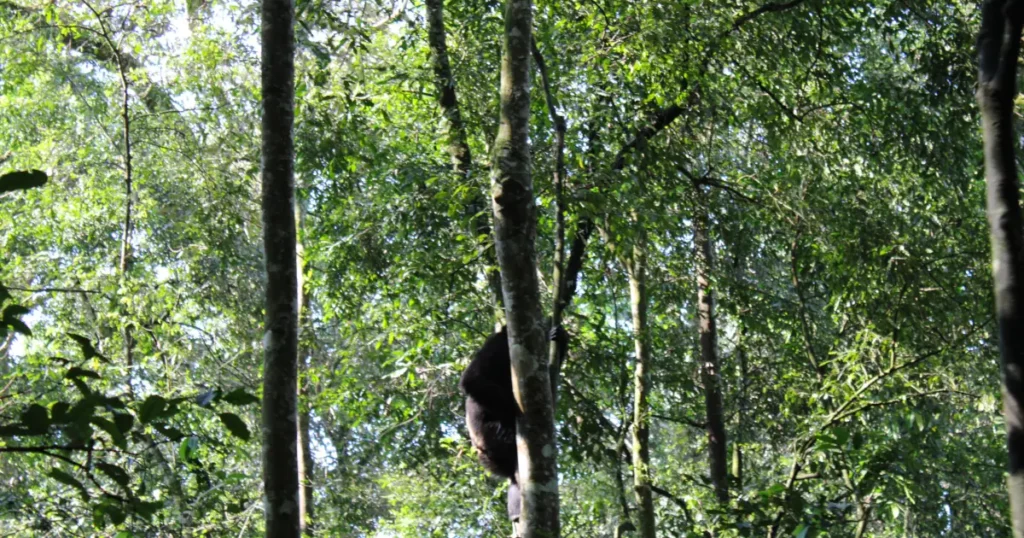
Chimpanzees love climbing trees while playing and feeding. They usually eat fruits, flowers, leaves, and seeds, making them frugivorous. Their daily diet consists especially of plants. They also eat small animals sometimes. This makes them omnivorous frugivores. Chimps face few threats while foraging. Their main predators are humans and leopards.
The scenery around parks and reserves is stunning. Mountains, rivers, lakes, and swamps are vital. They form vital ecosystems for chimpanzee groups and other wildlife.
Forests are wonderful homes for chimpanzees and other animals. In these woodlands, you can see animals like
- Gorillas, monkeys
- Baboons and galagos all live together with chimps.
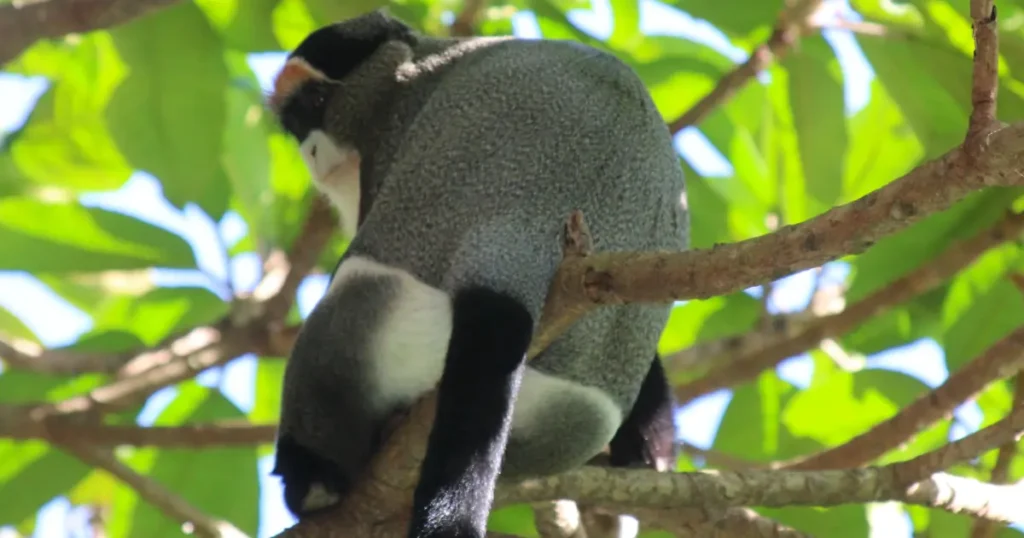
Bwindi Impenetrable National Park in Uganda is one of the parks where gorillas and chimpanzees live together. You might also see wildlife such as
- Elephants
- Buffaloes
- Warthogs
- Lions
- Leopards
- Antelopes and various birds are present during a chimpanzee trek.
Things to Do After Chimpanzee Trekking
Uganda has over 10 national parks with endless safari activities. You can enjoy game drives, gorilla trekking, golden monkey tracking, and bird watching. Other options include
- Mountain hiking in Rwenzori Mountains National Park
- Sport fishing along the River Nile
- White-water rafting
- Cultural tours in Toro Kingdom
- Tracking tree-climbing lions in Queen Elizabeth National Park
- The boat cruises along the Kazinga channel
- Mountain biking in Kibale’s crater lakes
- City tours in Fort Portal tourism city
There’s so much more waiting for you during an African safari in Uganda!
Packing List
Planning is key for chimpanzee safaris. If you don’t pack trekking items, you may face challenges during your trek, especially in the rainy season. Read more about the trekking packing list.
Most chimpanzees live in hard-to-reach areas with hills, valleys, and dense forests. A well-planned safari to see these endangered great apes is rewarding. Stick to the packing list. Here are the essentials:
- Long-sleeved shirts or T-shirts.
- Waterproof trousers
- Waterproof hiking boots
- Thick, long socks
- Leg gaiters
- Gloves
- Masks
- Poncho
- Wide-brimmed hat
- Backpack with snacks
- Insect repellents.
You might need snacks for the 2 to 4 hours spent trekking. Also, pack lunch for your chimpanzee habituation experience to avoid hunger. Don’t forget binoculars and a camera to make your tracking experience memorable.
Chimpanzee Trekking Rules
Uganda Wildlife Authority manages all national parks in Uganda. UWA sets trekking rules to keep you and the chimpanzees safe in the park. Chimpanzee rules and regulations in all Uganda parks are as follows:
Choose not to trek if you are ill because chimpanzees and humans share genes to a greater extent. Humans can spread diseases to apes and vice versa, especially communicable diseases.
Twelve years (12) of age is the youngest age for one to go chimpanzee tracking. Young children are difficult to manage while trekking in the forest. They might scare off the chimps and other wildlife or even get scared themselves.
Littering in the forest is not allowed. You must pocket your litter if you have any and dispose of it after the chimpanzee tour.
Being silent is better while trekking in the park. When you are silent, you see more since noise scares away wild animals.
If you can’t wait while trekking, ask the guide to dig a 30 cm deep hole in the park. You can use it to bury your waste. Diseases can spread from humans to apes if apes come into contact with human waste.
You’re prohibited from mimicking chimpanzee vocalizations while trekking. You might miscommunicate with the chimpanzees. Each chimp’s vocalization has a unique meaning for them.
Keeping a 25-foot distance from chimpanzees is a must at all times.
Eating while in the company of chimpanzees is not allowed. This is to avoid attracting their attention.
Chasing or scaring away a chimpanzee is not allowed. A chimpanzee can become violent in retaliation, hence ruining your trekking experience.
Flash photography is not allowed. When your chimpanzee trek team sees a group of chimpanzees, don’t use flash photography. Flashlights can scare the animals away.
Typical Chimpanzee Trekking Safaris
A typical chimpanzee safari lasts three days. It includes activities after the trek. If you have limited time, single-day safaris are also available in Uganda, East Africa. You can find more details about the 3-day Kibale Forest National Park tours here. Enjoy your trip!