
Kibale National Park
The Chimpanzee Forest
Kibale National Park in western Uganda is a forest famous for its many chimpanzees. It also has many beautiful volcanic crater lakes. Scenic tea estates and lush landscapes welcome you to this old-growth forest.
Kibale Location
Kibale Forest at coordinates 0.4364° N, 30.3667° E spans four districts. They are Kamwenge, Kyenjojo, Bunyangabu, and Kabarole. This park is 24 kilometers east of the Rwenzori Mountains. It’s known as Africa’s primate capital. Visiting this forest during a Uganda safari is rewarding. The nearest city, Fort Portal, is 25 km northwest.
How to Reach the National Park
You can reach Kibale by road. You can also take chartered and scheduled flights. The flights are from Entebbe to nearby towns like Kasese and Mbarara (Nyakisharara). If you take the Kampala-Mbarara route, you can visit Lake Mburo National Park too. Three main roads provide access: Kampala-Fort Portal, Kamwenge-Fort Portal, and Kamwenge-Hima.
The shortest route from Entebbe or Kampala is 326 km. It follows the Kampala-Fort Portal highway. This includes the roads through Kampala, Mityana, Mubende, Kyegegwa, Kyenjojo, and Fort Portal.
About the Park
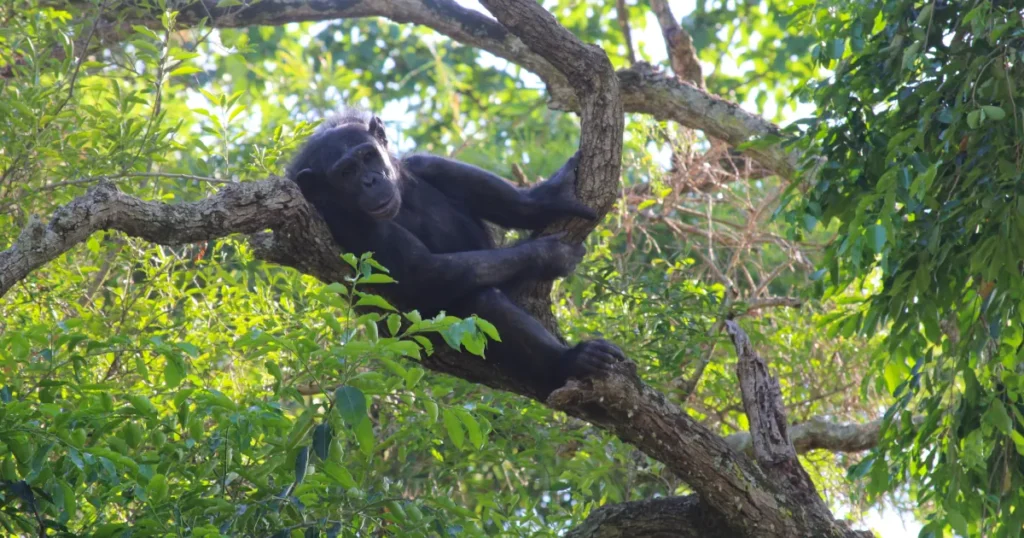
Kibale Forest covers 795 km² and ranges in elevation from 1,110 to 1,590 meters above sea level. Its diverse vegetation supports many species. The park is great for chimpanzee trekking and bird watching. It is popular because of its large chimpanzee population in Eastern Africa.
Uganda’s eastern chimpanzee population is second only to the Democratic Republic of Congo. Over 5,000 chimpanzees live in Uganda’s national parks, game reserves, and forests. Budongo and Bugoma Forest Reserves are also home to significant numbers. About one-third of Uganda’s chimpanzees dwell in Kibale.
Kibale is home to many animals. Along with chimpanzees, you can find forest elephants, baboons, and different monkey species. There are also birds, giant forest hogs, buffaloes, bats, rodents, and more mammals.
History of Kibale National Park
East Africa’s only medium-altitude tropical moist forest became Crown Forest in 1932. This was to allow commercial charcoal and timber logging. In 1948, it became a Forest Reserve. A large area between Kibale and Queen Elizabeth Park allowed wildlife to roam across.
In 1964, the government decided to protect this animal migration route. This corridor linking two wildlife areas was changed to a game reserve. It was named the Queen National Park-Kibale Forest Corridor Game Reserve.
Two reserves merged in 1993. Kibale Forest Reserve and Queen National Park-Kibale Forest Corridor Game Reserve. This merger created a park named Kibale. The Uganda Wildlife Authority (UWA) manages the park.
Vegetation
Kibale’s vegetation is more of a medium-altitude moist evergreen forest. This is in the northern and central areas. The southern part consists of a medium-altitude, moist semi-deciduous forest. The southern part also has a forest-savanna mosaic. The undergrowth has shade-loving plants. These include ferns, broad-leafed forest grasses, Pollia condensata (Marble Berry), and Palisota schweinfurthii.
Many fruit trees thrive in Kibale forest, which has a tropical climate. These trees are vital for the park’s chimpanzees and other primates. Chimpanzees usually eat plants from this beautiful forest. Dr. Jane Goodall documented how chimpanzees eat fruits, figs, insects, blossoms, eggs, honey, meat, seeds, and nuts.
Primates in Africa’s tropical forests shape the vegetation. They do this by spreading seeds while they move.
Tree Species in Kibale Forest National Park
A 2007 tree community analysis found more than 300 species in Kibale. The Kanyawara, Mainaro, and Ngongo sites had the most diversity.
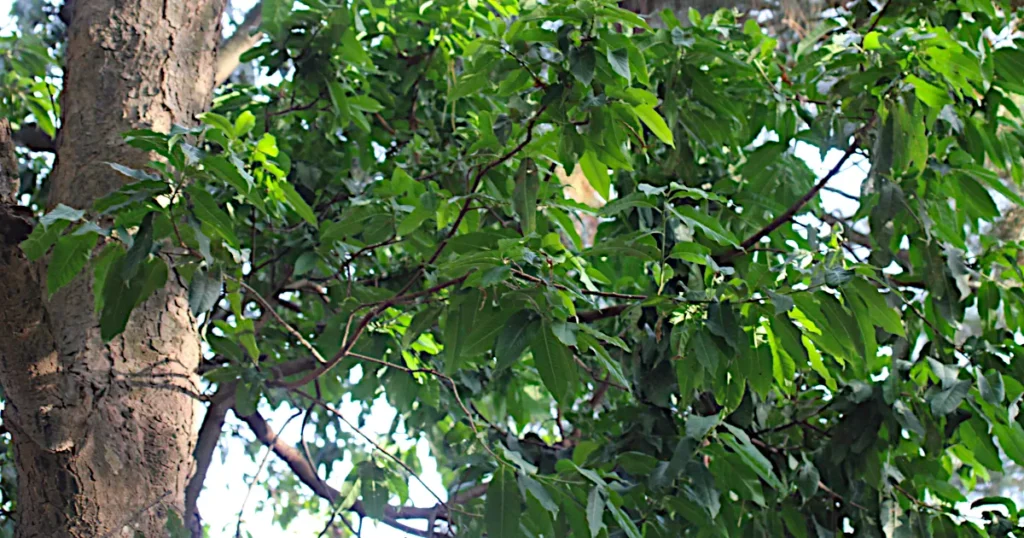
Parinari excelsa dominates in the north (Kanyawara). In the central area (Ngongo), Pterygota mildbraedii is more common. The southern part (Mainaro) has Uganda ironwood. Other species you might see are
- Celtis Africana,
- Dombeya mukole,
- Prunus africana,
- Neoboutonia macrocalyx,
- Chrysophyllum gorungosanum,
- Ficus exasperata, and
- Warburgia ugandensis.
Endangered tree species in Kibale Forest are:
- Tiama Mahogany
- Brown Mahogany
- Cordia millenii
Robusta coffee grows well in Kibale. It helps local communities thrive. The beans are for international export. If planned, Kibale Agrotourism can be part of your visit.
Animals in Kibale
This park is more than a flora conservation area in Uganda. Its water bodies and unique vegetation create a safe home for many animals. You will find birds, insects, mammals, amphibians, and aquatic species here.
Primates in Kibale Forest Park
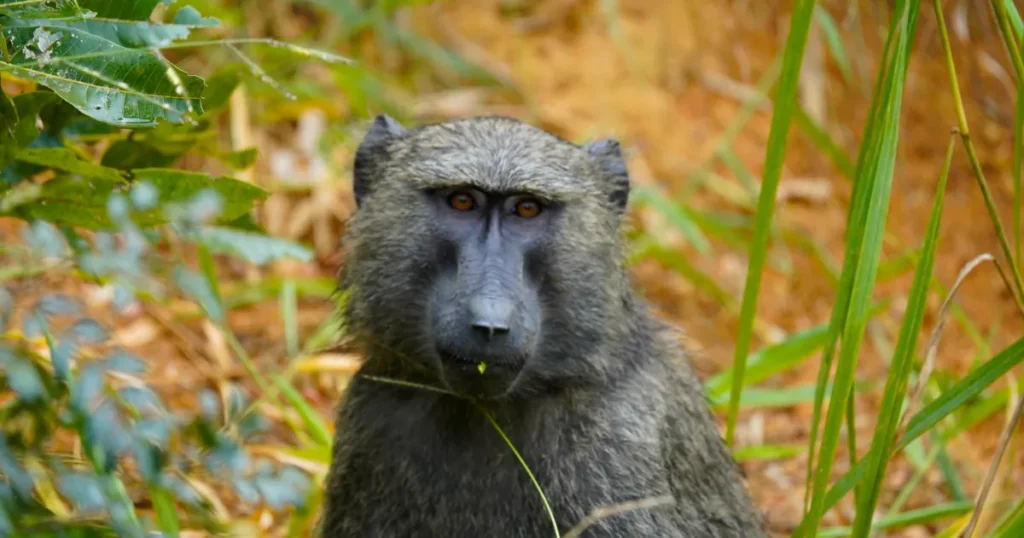
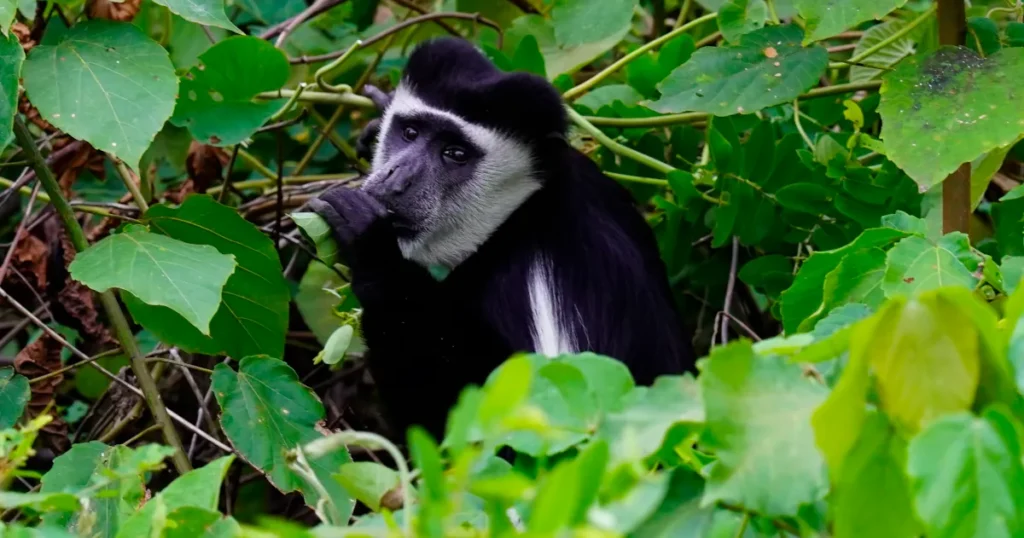
Uganda is the top safari destination in East Africa for primate species. People know Kibale as the “primate capital of the world.” It hosts 13 unique primate species in its lush forest. “Take note: there are no gorillas in Kibale Forest“. You might see all primate species in Kibale if you stay longer during your African safari. Kibale offers great chimpanzee trekking and primate safaris. These activities are popular in this Ugandan forest park.
Kibale forest primate species include
- Chimpanzee
- L’hoesti Monkey
- Redtail Monkey
- Olive Baboon
- Vervet monkey
- Blue Monkey
- Grey-cheeked Mangabey
- Black and White Colobus
- Thomas’s dwarf galagos
- Pottos
- Demidoff’s dwarf galagos
- Eastern needle-clawed galagos and
- Red Colobus.
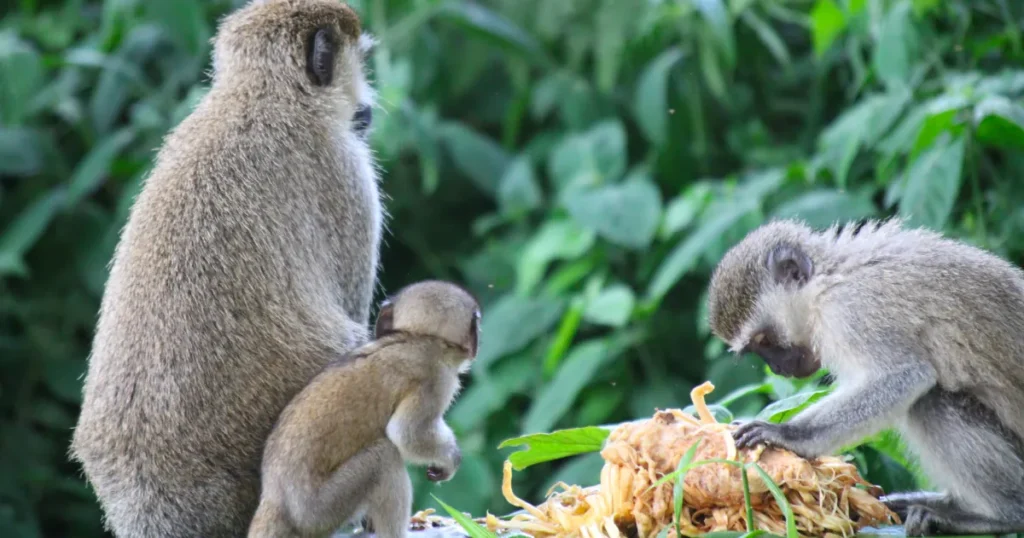
The Uganda mangabey is a grey-cheeked monkey. This subspecies lives only in Uganda, with a few also found in northern Tanzania.
You can find this mangabey in
- Bugoma
- Semuliki
- Kibale
- Itwara
- Sango Bay
- Mabira
Make sure you see these rare Old World monkeys when in Kibale.
Chimpanzee trekking safaris in the Kibale wilderness usually take 3 to 5 days. A 5-day Kibale safari is a great option since it lets you explore the whole forest interior and exterior. A 3-day Uganda primates trip to Kibale is for adventurers who wish to spend a few days in this wildlife park.
Other wildlife in Kibale National Park.
Big mammals include the African elephant, the forest elephant, and the buffalo. The blue duiker, sitatunga, warthog, bushpig, and red duiker are more mammals that live in Kibale.
These species share the forest with primates.
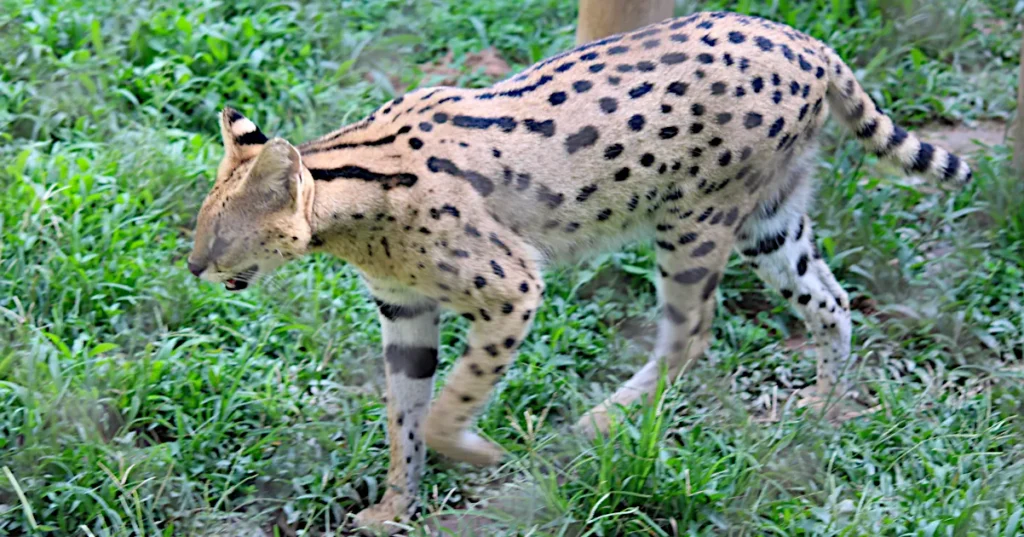
Carnivores in Kibale include:
- Lion
- African civet
- Genet
- Mongoose
- Otter
- Serval cat
- Spotted hyena
- Honey badger
- Striped polecat
- Leopard
- Side-striped jackal
Birds in Kibale Forest
Kibale Forest is an excellent birding park in Uganda. It boasts over 370 bird species. If you’re on a Uganda birding safari, spotting these birds is a must in this beautiful forest. Birding in Kibale is a top choice for bird lovers. The park’s lakes, rivers, and swamps create a rich ecosystem. This supports a wide range of wildlife, making it a great forest for bird enthusiasts.
One bird subspecies is endemic to Kibale (Kibale ground-thrush). The nature park is home to birds that are unique to the Albertine Rift. These are:
Dusky Crimsonwing, Red-faced Woodland Warbler, Rwenzori Apalis, Blue-headed Sunbird, and Purple-breasted Sunbird.
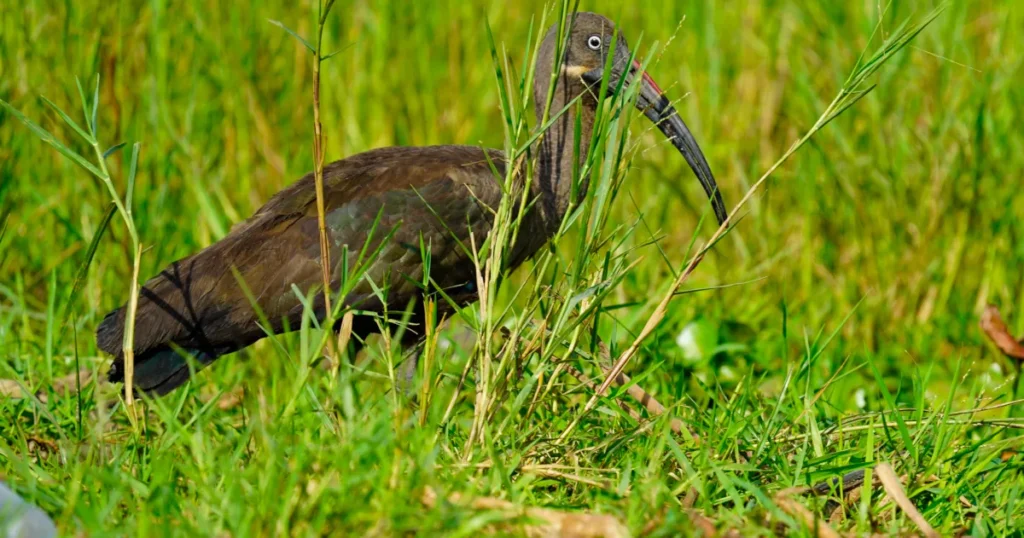
The Uganda medium-altitude moist forest is home to many birds. Some are the Little Grebe, Red-billed Dwarf Hornbill, Black-capped Apalis, and Wing-snapping Cisticola. Look for the Sand Martin, Speckled Mousebird, and Violet-backed Starling, too. The list is endless.
Things to do in Kibale Forest Park.
Tour activities in Kibale began in 1993 when the forest reserve changed to a national park. A trip to Kibale Park in Uganda is exciting. Meeting chimpanzees, our closest relatives, is a rewarding experience. The park has a high success rate for chimp tracking and offers many other activities.
Tourism activities in and around the national park include:
- Chimpanzee habituation experience
- Chimpanzee tracking
- Bird watching
- Crater Lake Tours
- Kibale Nature Walks
- Night walks
- Community visits
- Trekking in Bigodi Wetland Sanctuary
These experiences let you discover the park’s varied wildlife and stunning scenery.
Chimpanzee Trekking
In Kibale Game Forest, chimpanzee tracking is the top tourist activity. It ranks after gorilla trekking in Uganda’s Bwindi Impenetrable National Park. Gorillas are in Bwindi and Mgahinga, not Kibale. The number of chimpanzees in Kibale Park is around 1,500.
The park’s elephant and buffalo populations are increasing. Thanks to strict conservation efforts.
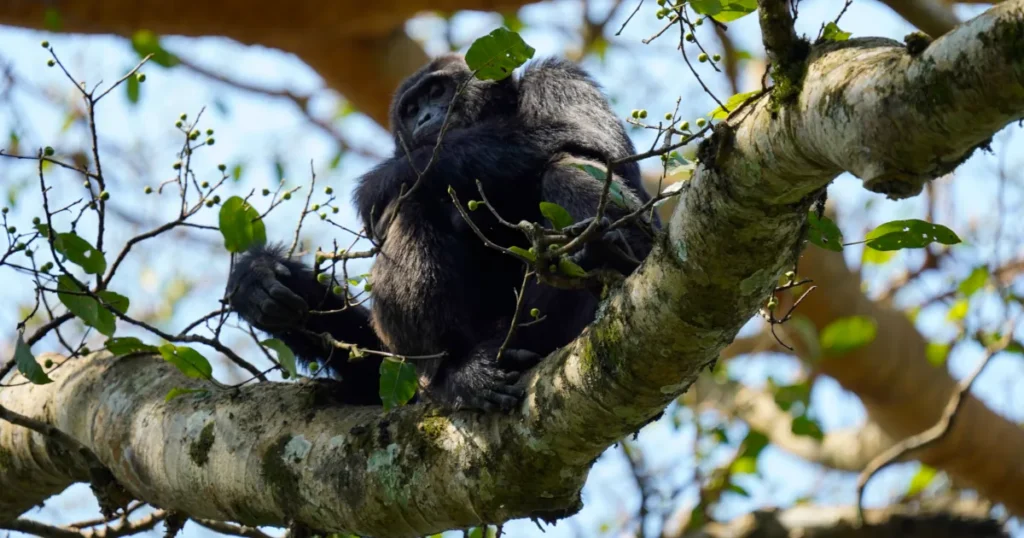
Chimpanzee communities in Kibale National Forest are habituated for research and tourism. A Uganda safari to see these chimpanzees is a must. It’s an amazing experience that should be on your to-do list.
Kibale Birdwatching
Kibale Game Park is a medium-altitude, moist park in Uganda. It’s a popular birding spot, home to many bird species, including those unique to the Albertine Rift. Lakes, rivers, swamps, forests, and grasslands host birds in Kibale.
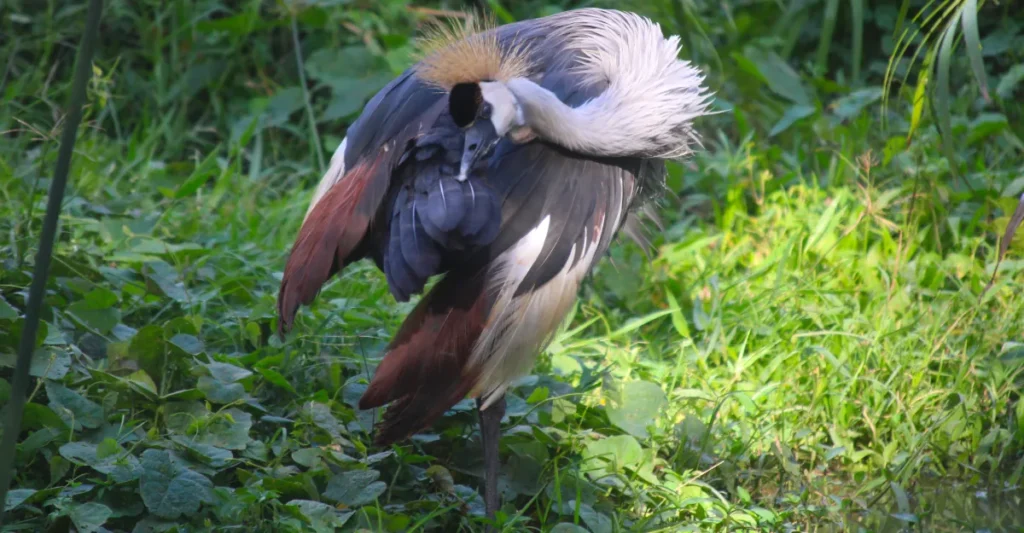
On the edge of the park is Bigodi Wetland Sanctuary. Bird lovers never fail to notice this spot. Bigodi Swamp features hiking trails and raised areas for bird watching. These areas give you a great birding experience in Kibale. Birds such as
- White-collared Oliveback
- Papyrus Gonolek
- Papyrus Canary
- White-winged Swamp Warbler
- Western Nicator
- Gray-green Bushshrike, and
- Superb Sunbirds are in Kibale.
Crater Lakes in Kibale National Park
The Western Rift, also known as the Albertine Rift, is a stunning volcanic region. It features several lakes, including the Ndali-Kasenda crater lakes. These lakes sit close to Kibale Forest, right at the base of the Rwenzori Mountains.
You can enjoy the stunning crater lakes in and around the park. Hike, take boat rides, or go mountain biking to explore. Over 30 crater lakes compose the Ndali Kasenda crater field.
Ndali Lodge
Are you planning to stay near one of the crater lakes?
Ndali Lodge is one of the most luxurious lodges in Kibale. It’s at the shores of one of the craters (Lake Nyinambuga). The lodge is among Uganda’s finest safari lodges. While staying at the lodge, you can participate in a variety of activities after chimpanzee trekking.
Visit the vanilla, cardamom, and coffee farm. You can also visit residents to see how Ugandan moonshine is brewed. Boat trips on some of the lakes are also available on request at Ndali.
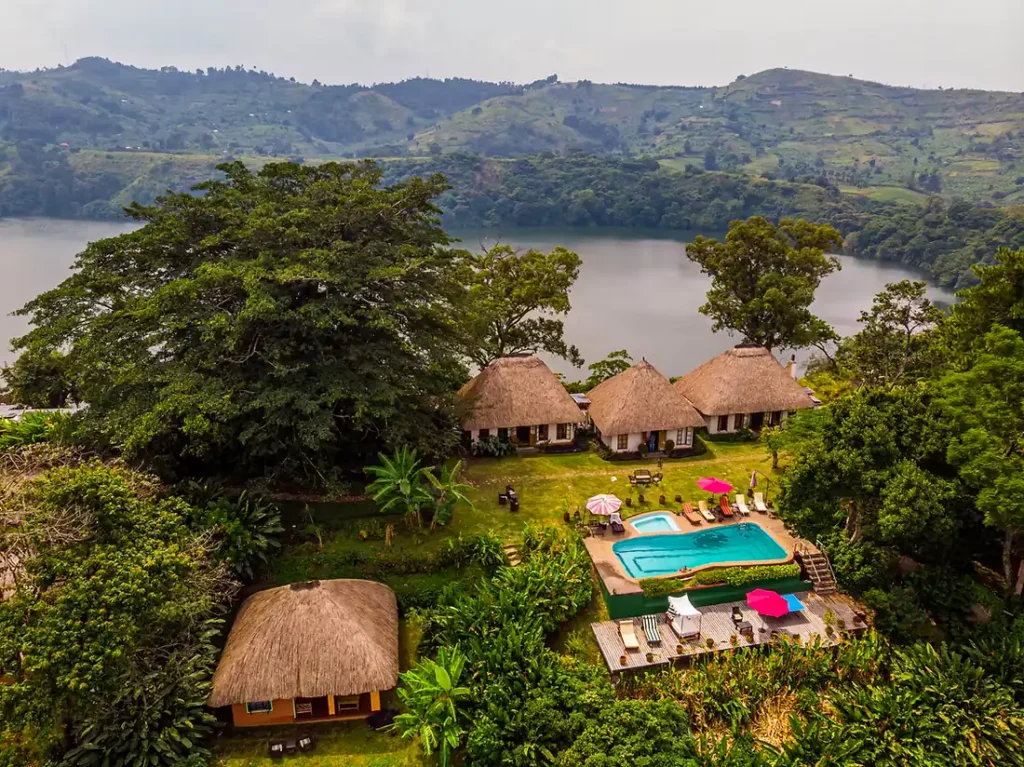
Kanyanchu, Kyerabwato, Kerere, and Kisibendi are some of the lakes in Kibale Forest.
Crater lakes near the park include: Nyabikere, Nyinabulitwa, Nkuruba, Nyanswiga, Nyantonde, Kifuruka, Mwegenyi, Katanda, Rukwanzi, Kanyango, Mwamba, Lugembe, Kasenda, Murusi, Nyamugosani, Njarayabana, Wankenzi, Wandakara, and Murigamire.
Nature walks in Kibale Forest Park
Trekking in Uganda’s moist forests is an amazing experience. You’ll see amazing nature, with rich vegetation and diverse animals. Hiking in Kibale offers a chance to witness the entire forest. The park trail traverses forest, swamp, grassland, and river terrains.
A guided walk in Kibale Forest, day or night, lets you spot some of the 13 primate species in the park. Primate trekkers rate the animals highly in this national park. Birders often praise the Kibale Forest birds on their nature walks in the woods.
Night walks in Kibale National Forest are an exciting way to spot nocturnal animals. You might see potto, galago, and bushbaby. You can spot tree hyrax, serval cats, and African civets during a night walk in the park. The sounds of insects fill the air. Kibale birds, like nightjars and owl species, are active during the night.
Bigodi Swamp Walk
The swamp is home to charming animals and vegetation. Over 138 bird species dwell in the Bigodi wetland sanctuary. Birders recommend touring Kibale while on an African birding safari. Birdwatching in Kibale National Park starts early in the morning at Kanyanchu. Make sure to book your birding activity before your trip.
Community visits outside the national park.
The people near Kibale Park are Batooro and Bakiga. The Batooro have a rich and unique culture. Tooro Kingdom has a king, “Omukama wa Tooro” (the King of Toro), His Majesty Oyo Nyimba Kabamba Iguru Rukidi IV.
The Tooro Kingdom is in western Uganda. It’s known for its stunning scenery, rich culture, delicious food, and friendly people. You can learn a lot from the Tooro people when you visit Kibale Chimpanzee Park.
When to Visit
Kibale has a tropical climate. Since the national park is close to the equator, it can rain at any time of the year. Kibale’s annual temperatures range from 15°C to 27°C. It receives about 1,700 mm of rainfall. February is the warmest month. The rainy months are March, April, May, September, October, and November.
Kibale, a moist forest national park, receives visitors year-round. Most parts of the country have wet and dry seasons. It’s best to visit when the rainy season ends and the dry season starts. This is true for chimpanzee trekking in Uganda. Rain is important for fruiting trees of this forested national park.
Chimpanzees are omnivorous, but they are also frugivorous. Fruit trees in Kibale Park bear a lot of fruit during two main seasons: June to July and November. Because of this, chimpanzees stay close by for food. This makes chimpanzee trekking easy during these times.
Kibale forest chimpanzees eat what is available based on the season. To a greater extent, the wet and dry seasons influence their diet.
Chimpanzees are omnivorous frugivores. They love fruit trees like Ficus, Maesopsis eminii, and Celtis gomphophylla.
Staying in or near the park is highly recommended. When staying in Kibale forest lodges, there are many activities to do around the forest.
Parks nearby.
When near Kibale Forest Park, you can explore these interesting parks:
- Bwindi Impenetrable National Park
- Rwenzori Mountains National Park
- Queen Elizabeth National Park
- Semuliki National Park
- Murchison Falls National Park is the farthest option.
Visit Uganda, a top chimpanzee trekking safari destination in Africa.