
Semuliki National Park
The True Birders’ Haven
Semuliki National Park in Uganda is a beautiful riverine forest. It is home to many unique wildlife species. The park sits in the western part of the East African Rift Valley. Semuliki is a top safari spot in Africa. It features birds, primates, and hot springs.
Location of the park
The national park covers 220 square kilometers. It’s in Bundibugyo District, Western Uganda. To the west, it borders Congo’s Virunga National Park. To the southeast lies the Rwenzori Mountains National Park. Lake Albert and Toro-Semliki Game Reserve are to the north. The coordinates are 00°49′59″N 30°02′60″E, with the closest city being Fort Portal.
Getting to Semuliki
Semuliki, a park west of Uganda, is accessible via the Kampala-Fort Portal roads.
You can reach the park by two main paved routes:
- Kampala to Fort Portal via Mubende: 296 km, about 5 to 6 hours.
- Kampala to Fort Portal via Masaka, Mbarara, and Kasese: 424 km, around 7 to 8 hours.
The distance from Fort Portal to Semuliki (Sempaya Park Office) is about 60 km. Traveling through these towns and lush countryside offers unforgettable experiences.
You can book flights to Semuliki Airstrip or Kasese Airstrip. These flights leave from either Entebbe International Airport or Kajjansi Airstrip. A safari vehicle then transports visitors by road to the park.
Park Overview
This tropical rainforest in Uganda attracts birders from around the world. It provides a true African safari experience.
The park, named for the Semuliki River along its western edge, is sometimes spelled as Semliki.
Uganda’s Semuliki has a fascinating history. In 1932, this biodiverse area became the Semuliki Forest Reserve. Finally, Semuliki National Park was established in 1993. This change brought more protection under the Uganda Wildlife Authority (UWA).
The word “Semuliki” comes from the Lhukonzo language in Uganda. It means “nothing.” According to local lore, a colonial administrator once asked a Mukonjo woman the name of the river he crossed. She was worried he might steal her fish, which she carried in a basket. She responded, “semuliki, semuliki,” meaning “nothing, nothing,” insisting her basket was empty. The administrator misunderstood because of a language barrier. He reported the river as Semuliki, which then became the park’s name.
More than 43% of Uganda’s bird species are in Semuliki. This area is part of the Afrotropical region, which also has 20% of the world’s butterfly species. The park is in the Eastern Afromontane biodiversity hotspot. It has around 63 mammal species. Chimpanzees, baboons, crocodiles, hippos, elephants, antelopes, and many monkeys are in the park. This makes for great wildlife viewing opportunities.
Nyansimbi and Bintente are popular hot springs in the park. They attract thousands of visitors each year. Guided nature walks, hiking, and boat trips are among the top activities in Semuliki.
Vegetation of the National Park
Semuliki has lush landscapes linked to the Congo Basin forests in Central Africa. The Semuliki River separates the park from the Ituri Forest. This river forms part of the Uganda – DRC border. The park has more than 160 tree species, including some endangered species. This makes up 39% of all tree species in Uganda. Many of these plant species are unique to this area of East Africa.
The vegetation is a moist semi-deciduous forest. It has dominant species, such as muhimbi (Cynometra alexandri). Swamp forests host Ficus vogeliana, Mitragyna stipulosa, and Elaeis guineensis. These trees create vital homes for many bird species.
Animals in Semuliki National Park
This biodiverse tropical park mirrors the richness of the Congo rainforest. Conservation efforts have yielded increased and stable animal populations within the park.
Records show over 235 moth species, 300 butterfly species, and more than 441 bird species. 35 bird species are endemic to East Africa. The park is home to 63 mammal species, including 12 primate species.
Mammals
Some of the mammals found here include
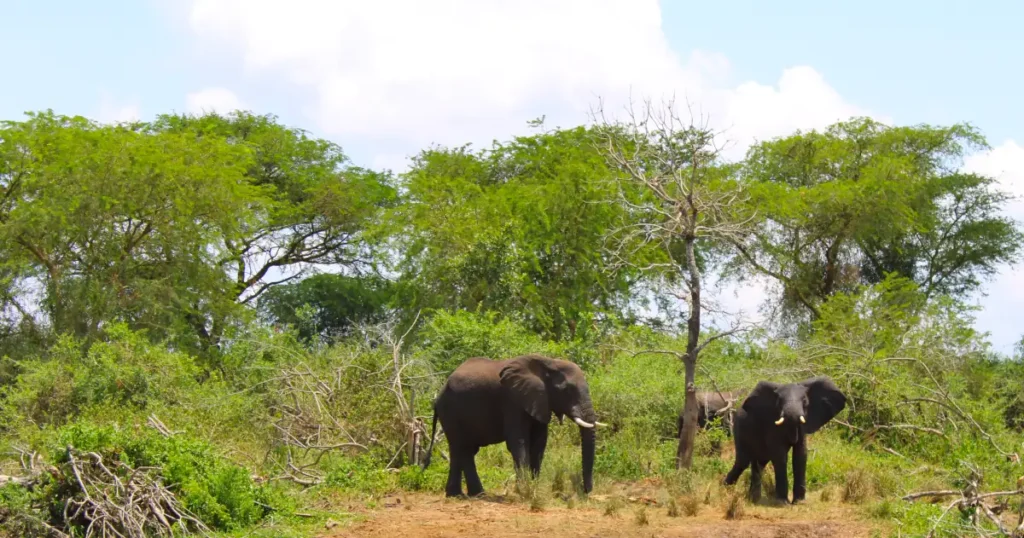
- African elephants
- Waterbucks
- Warthogs
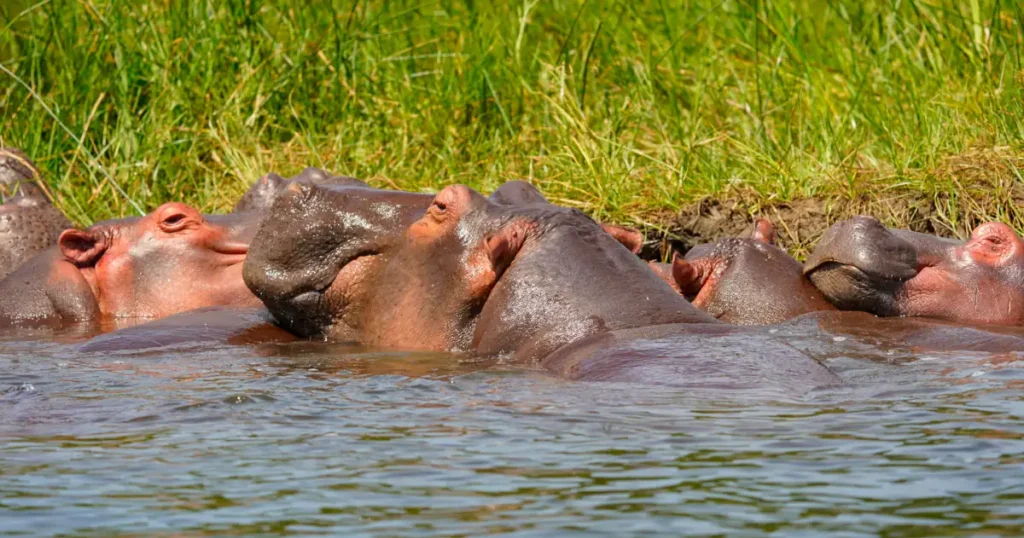
- Hippos
- Pygmy scaly-tailed flying squirrels
- Bush pigs
- Uganda Kob
- Forest buffalo
- Leopards
- Bay duikers and
- Water chevrotains.
Day-active primates include:
- Chimpanzees
- Olive baboons
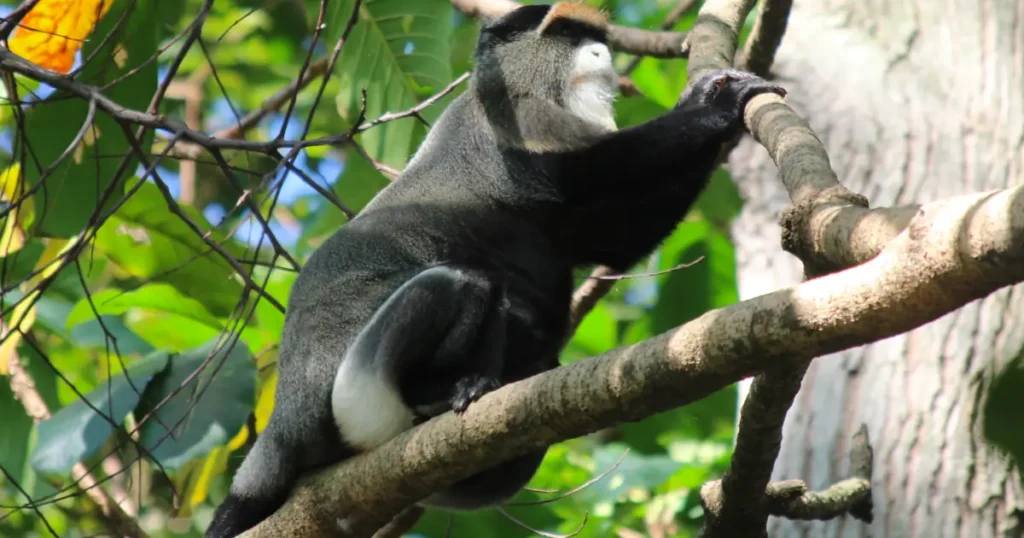
- De Brazza’s monkeys
- Black-and-white colobus monkeys
- Blue monkeys
- Red colobus monkeys
- Vervet monkeys
- Red-tailed monkeys
Nocturnal species such as potto and galagos (bush babies) are also present.
Birds
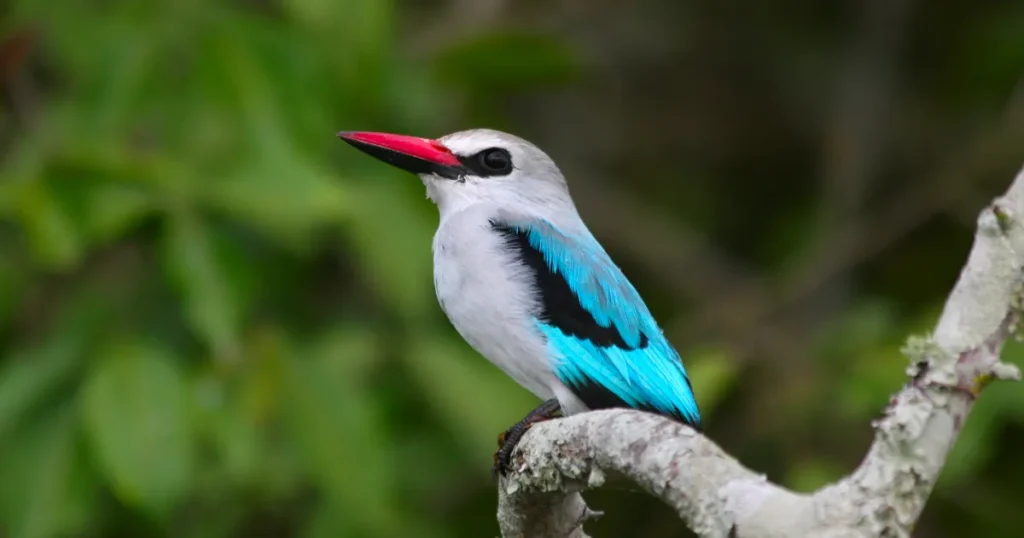
Semuliki is a fantastic spot for birding, hosting over 43% of Uganda’s bird species. Notable birds are
- Black-and-white-casqued hornbills
- Sassi’s olive-greenbuls and,
- Nkulengu rails.
You can also find Oberländer’s ground thrushes, long-tailed hawks and Congo snake-eagles. Lyre-tailed honeyguides, Gabon woodpeckers and White-thighed hornbills too.
Butterflies in Semuliki
This national park boasts an impressive array of insects.
You can find butterflies, such as:
- Black-bordered charaxes (Charaxes pollux)
- Charaxes fulvescens
- Bicyclus alboplaga
- Euphaedra alacris
- Euphaedra hollandi
- The common pathfinder (Catuna crithea)
- The shining green forester (Bebearia barce)
These are some of the many butterflies in this park.
Aletis helcita is a day-flying moth found in Semuliki Park.
Semuliki attractions and safari activities.
The main attractions in this national park are its animal species. Some of these species are unique to the Albertine Rift. This park offers more attractions.
You can enjoy lush vegetation, hot springs, and unique cultures, among others. A typical 5-day Semuliki Uganda safari lets tourists explore all parts of the park. But those short on time can opt for a 3-day safari.
Sempaya Hot Springs in Semuliki National Park
Sempaya, a popular part of the national park, is famous for two strange hot springs. One is the “male” hot spring, known as Bintente, and the other is the “female” hot spring, named Nyansimbi. The two hot springs, Nyansimbi and Bintente, release geothermally heated mineral-rich water. This water flows onto the park’s surface in Sempaya.
Nyansimbi hotspring
Nyansimbi, meaning “female ancestors,” is a geyser. It shoots very hot, bubbling water up to 2 meters high. Nyansimbi geyser water is hot. The temperature reaches 100°C. You can walk to the Nyansimbi hot spring from the park office in Sempaya. The path goes through a palm tree forest. Walking to Nyansimbi usually takes approximately 15 minutes.
Bintente Hot Springs
Bintente, the “male” hot spring, is about one hour from the Sempaya Uganda Wildlife Authority (UWA) park office. You can trek to Bintente using a forest trail and a swamp board. Along the way, you’ll see the Rwenzori ranges, which include Uganda’s tallest peak. The Bintente hot spring, deep in the forest, is 12 meters wide, with its pool always shrouded in steam.
Hydrothermal activities in Nyansimbi and Bintente are connected to the local communities. Some locals, such as the Batwa pygmies and Bamba people, think the hot springs can heal. Tourists love the stunning wildlife near the hot springs. They often boil eggs or green plantains in the geysers to enjoy while trekking.
Birding in Semuliki Park
The park, called “The True Birders’ Haven,” is home to many bird species in Uganda. Some of these birds are unique to this area.
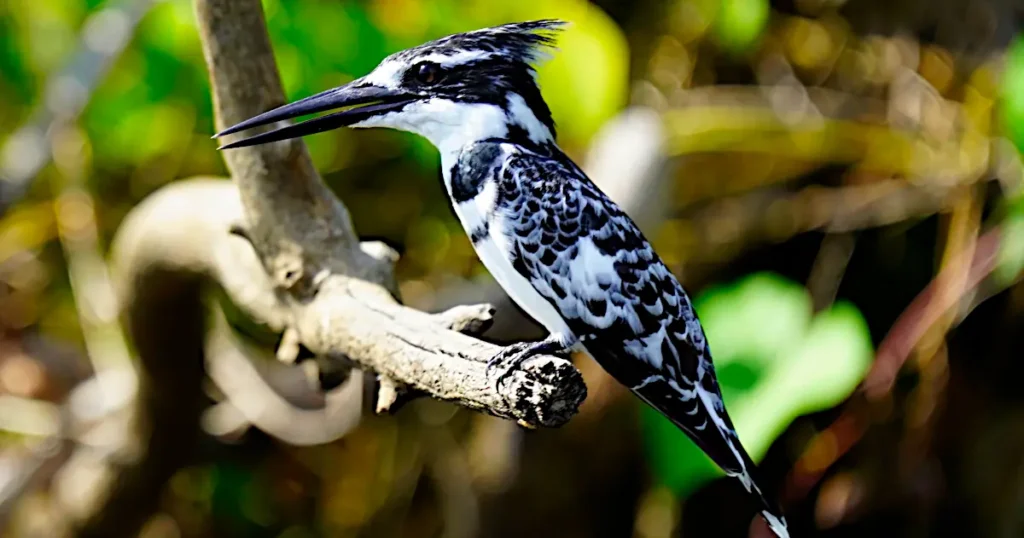
In Semuliki Park, you’ll spot many birds. Common sightings include:
- Bank Swallow
- Red-billed Quelea
- Ring-necked Dove
- Barn Swallow
- Western Cattle-Egret
- Waller’s Starling
- Little Swift
- Vitelline Masked-Weaver
- Eastern Yellow-billed Barbet
And many more await you on a birding safari!
Kirumia Trail is famous for birding in Semuliki, day and night. Some tourists even choose to camp in the park at night. The Kirumia Trail is 14 km long. It goes to the Semuliki River and cuts through the tropical lowland forest.
Semuliki National Park Nature Walks
You can enjoy day and night walks in Semuliki. Night walks are great for spotting nocturnal primates like potto and bush babies. You can also encounter some butterflies and moths that are active during the night. You can see birds everywhere in Semuliki Forest Park at night. While walking along forest trails, visitors meet several animals and scenic views. The Red Monkey Trail and Kirumia Trail are popular short trails in Semuliki.
Boat trips
Boat trips along Lake Albert to see the shoebill by boat cost $100. Encountering other birds and animals along the lake shores is a must. Hiring a boat in Ntoroko fishing village also costs $100.
Cultural visit
Tourists can visit the Karugutu Community Conservation Association (KCCA). The Batwa forest community in Semuliki is also available for visits. The Batwa Experience in Semuliki costs $10. Karugutu is a great spot for cultural dance and local handicrafts. The Uganda Twa people are at the Boma Cultural Village in Semuliki.
Chimpanzee Trekking
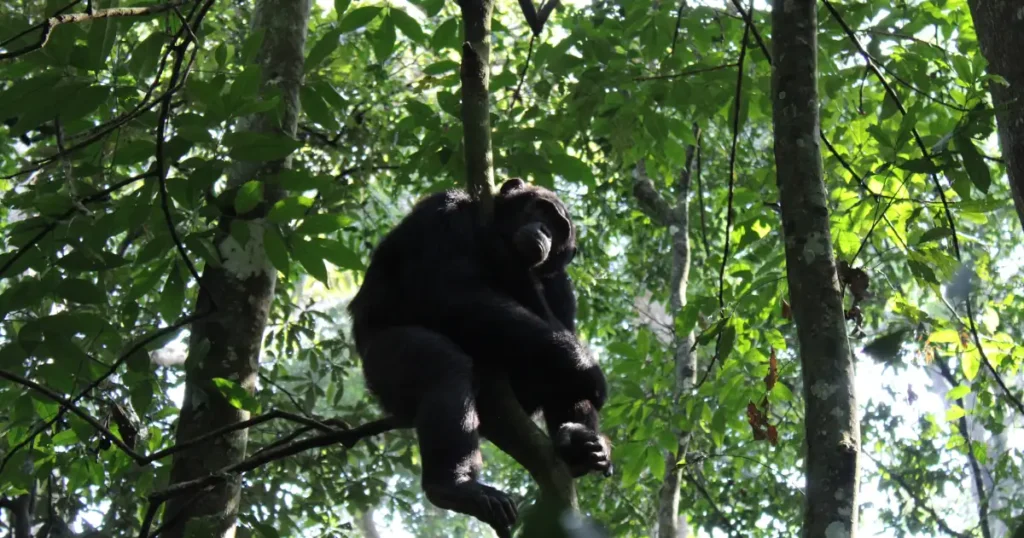
The Toro Semliki wildlife reserve is a perfect place for chimpanzee tracking. A small group of chimpanzees has been reserved for tourism. Chimpanzees and other primates in this reserve can be sighted during the nature walk. Semliki Safari Lodge is a good place to start your chimpanzee tour.
Difference between Semuliki Park and Toro Semliki Wildlife Reserve.
The wildlife reserve and national park often confuse nature lovers. Yet, they are two different conservation areas. The Toro Semliki Wildlife Reserve, east of the park, is very different from the national park. They have unique vegetation and wildlife.
A forest dominates the park while grassland covers the reserve. This explains why there are game drives in the reserve. No game drives in the park because it’s a forest. Only forest walks are done in Semuliki Park.
The reserve and the national park are separated by a 20 km stretch of the North Rwenzori Mountains ridge. The Toro Semliki reserve was recommended for national park status.
Climate of Semuliki
The Rwenzori Massif, Lake Albert, and the Congo rainforests shape the climate of Semuliki. The highest temperature is 34°C, and 20°C is the lowest. There are two wet seasons: from August to November and from March to May. The dry season occurs twice a year, from June to July and December to February.
The best time to visit Semuliki is year-round. The park has moderate rainfall, even in the rainy season.
Where to stay in Semuliki National Park
Affordable budget accommodation near Sempaya is Bumaga Camp by UWA. The other budget lodges are approximately 20 km from Bumaga in Bundibugyo town. Fort Portal City offers a range of mid-range and luxury hotels. These hotels meet the needs of all types of tourists visiting the park. Semliki Safari Lodge is a high-end option available. Ntoroko Game Lodge has luxury tents.
Nearby Parks.
Semuliki is near three parks: the Rwenzori Mountains, Kibale, and Queen Elizabeth National Parks. Visiting these parks after visiting Semuliki Park is a brilliant idea.