
Murchison Falls National Park
The Big Five of Africa
Murchison Falls National Park is an amazing savanna located northeast of Lake Albert. It features borassus palm trees and a diverse array of wildlife.
Murchison is Uganda’s largest national park. The Victoria Nile divides the park into two. This river is home to Murchison Falls, the country’s most powerful waterfall. The roar of the falls shakes the surrounding walls of the riverbank.
Visitors travel from afar to see this amazing natural wonder. The big five animals and waterfalls are the dominant attractions. The park has waterfalls, forests, and a variety of wildlife. Birds, reptiles, amphibians, insects, and mammals are all in this park.
Park Overview
Murchison Falls Park is Uganda’s oldest national park. It’s part of the Murchison Falls Protected Area. It boasts a diverse array of wildlife species and impressive waterfalls. Murchison or Kabalega Falls is the strongest waterfall along the Nile.
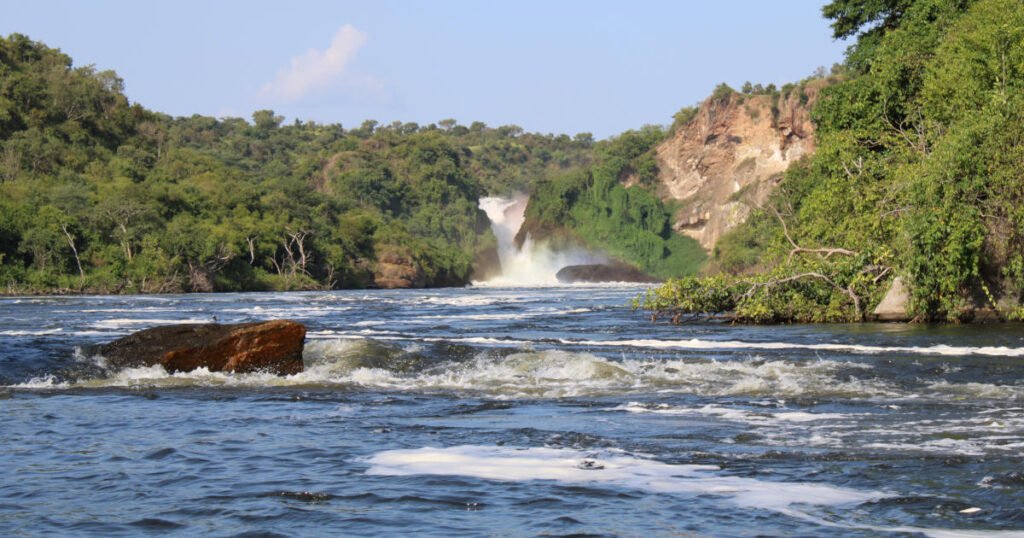
The savannah plains, nourished by the Victoria Nile, support different plant species. These plants provide forage for wildlife, creating a balanced ecosystem protected by carnivores. The Borassus palm trees stand tall, adding beauty to these wildlife-rich grasslands. The park has forests: Rabongo, Kaniyo Pabidi, and Budongo. These areas are home to primates, including endangered chimpanzees.
Murchison Falls is the largest park in Uganda. The park featured in the 1951 film, The African Queen. It starred Humphrey Bogart and Katharine Hepburn, all filmed in this game reserve.
In 2014, the Wildlife Conservation Society (WCS) conducted a survey of the Murchison Falls Conservation Area. The survey revealed a variety of wildlife species that had never been recorded in Uganda’s Murchison Park or the entire conservation area. Researchers found,
- 556 bird species
- 144 mammal species
- 51 reptile species
- 51 amphibian species, and
- 755 plant species.
While exploring Murchison Falls, tourists can see four of the “big five”:
- Lion
- Leopard
- Elephant and
- Buffalo.
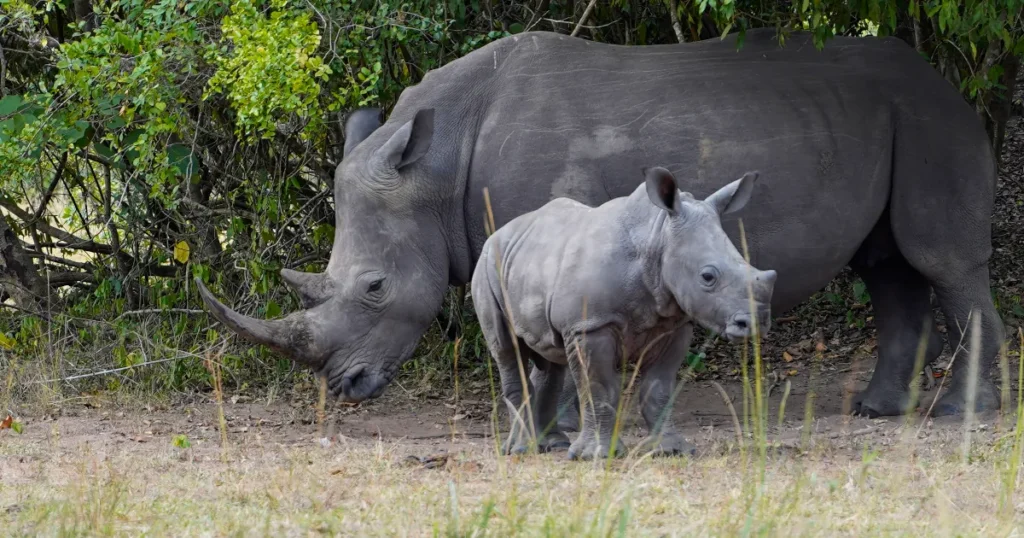
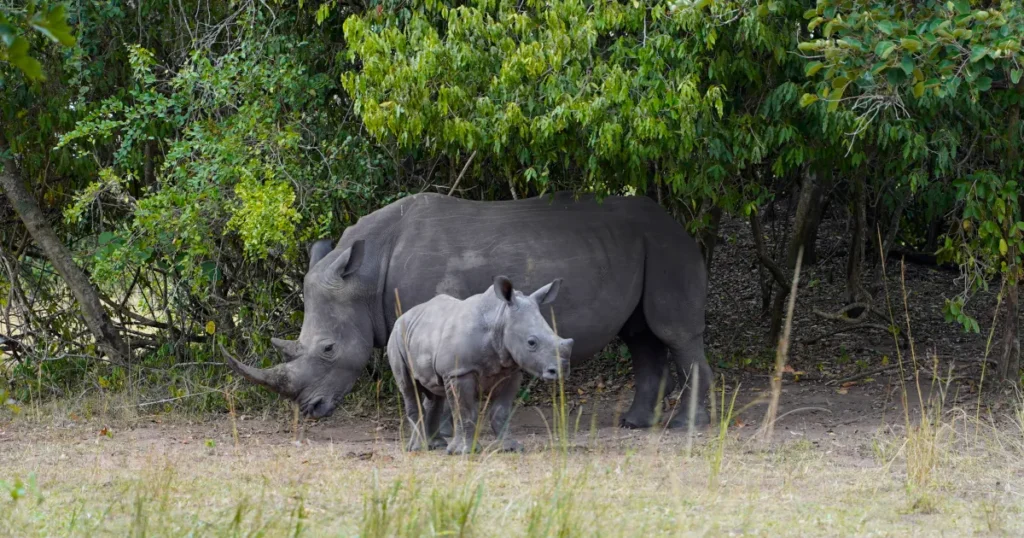
Rhinoceros the Fifth is in the nearby Ziwa Rhino Sanctuary. In short, tourists can see all the big five during a Murchison Falls National Park safari.
Popular activities in Murchison include
- Game drives
- Bird watching
- Chimpanzee trekking
- Hot air balloon rides and
- Boat trips along the Nile.
Conservation efforts have helped revive giraffe numbers in the park. The IUCN Red List, lists giraffes as vulnerable. Murchison hosts over 75% of all Rothschild’s giraffes. This subspecies belongs to the northern giraffe, especially the Nubian giraffe.
Murchison Falls’ location
This national park covers 3,877 square kilometers in northwestern Uganda. It spans the districts of Masindi, Buliisa, Kiryandongo, Nwoya, and Nebbi at coordinates 2°15’06.5″N 31°48’24.9″E.
The Uganda Wildlife Authority’s Protected Area Assessment Programme lists these protected areas:
- Murchison Falls Park: 3,877 km²
- Karuma Wildlife Reserve: 678 km²
- Bugungu Wildlife Reserve: 501 km²
The Murchison Falls Protected Area (MFPA) covers a total of 5,056 km². The Uganda Wildlife Authority (UWA) manages this area. Budongo Forest, located south of Murchison Falls, covers 825 km².
Getting There
The drive from Kampala to Masindi is 305 km, taking about 4 hours on a paved road. From Masindi, it’s another 86 km to Kichumbanyobo Gate, leading to Paraa. Paraa is the main tourism hub in Murchison and the park headquarters.
If you’re driving from southwestern or western Uganda, like Fort Portal, it takes about six hours. The distance covered is 280 km to reach Murchison.
Daily flights to Murchison Falls leave from Entebbe International Airport or Kajjansi Airfield. They land at Pakuba Airfield, which is north of Paraa. There are also flights to Chobe, east of Murchison, or Bugungu, south of Paraa. Pakuba is the most popular landing airstrip. It’s near the national park headquarters and many lodges.
How do I Get to Murchison Falls National Park?
Reaching scenic Murchison is by road or air. The River Nile divides the park into two parts, making both options viable. Tourists with a safari company or on a self-drive can take the road. Air travel is another option for visiting this iconic park. The quickest route from the south is through Masindi Town to Paraa.
From Kampala, another option is to enter through Wankwar or Tangi gates via Karuma. This route leads to the park’s most popular area. If you are coming from the north, Purongo Gate is a great entry point.
History of the park
In 1910, the area below the Victoria Nile was set up as the Bunyoro Game Reserve. In 1926, the Game Department gazetted it as a game reserve in Uganda. The Bunyoro and Gulu Game Reserve protected both savannah and forest wildlife.
The National Assembly of Uganda passed the National Parks Act in 1952. This act set the stage for national parks. That year, Bunyoro-Gulu Game Reserve turned into Murchison Falls. It was Uganda’s first national park.
Nearby areas were also protected to serve as buffer zones. Karuma Game Reserve started in 1964. Bugungu Game Reserve followed in 1968. Both reserves help protect wildlife.
Murchison Falls got its name from Sir Roderick Murchison. Explorer Sir Samuel Baker named it in 1863-64. Baker called it “the greatest waterfall of the Nile.” John Speke and James Grant were the first Europeans to see the falls in 1862. Baker named Lake Albert, earlier known as “Mwitanzigye,” meaning “Killer of Locusts.”
Theodore Roosevelt and Sir Winston Churchill are the first famous visitors. Also, Ernest Hemingway admired Murchison Falls for its stunning beauty.
Murchison Falls National Park became famous in the 1960s. Currently, it’s one of Africa’s most popular national parks. It was Uganda’s most-visited park, drawing over 60,000 visitors per year. This influx generated significant revenue. Developers built lodges in and around the park. These lodges welcomed tourists eager to see Uganda’s Big Five. To keep ecological balance, the culling of over 2,000 elephants from 1965 to 1967 took place. This was necessary because of the high concentration of animals.
Tsetse flies in Murchison affected wildlife. These flies cause sleeping sickness. This disease affected rural people in Uganda near the Victoria Nile. To address this issue, over 13,000 square kilometers of land were cleared from 1907 to 1912. This action created a haven for wildlife.
Vegetation
Most vegetation cover in Murchison Falls is due to animal and human activities. Wildfires, elephants, giraffes, and hippopotamuses affect the park’s plant life. The main types of vegetation are forests, swamps, and savannahs.
South of the park is Budongo Forest Reserve, an old evergreen tropical forest. It features Celtis, Ficus, and Uganda Ironwood. Below the Victoria Nile, woodlands and grasslands dominate.
North of Murchison Falls is savanna vegetation. It has many Borassus aethiopum palms. Elephants enjoy the fruits of these palms. Their patterns help spread these trees throughout the region.
The savanna north of Murchison has a variety of wildlife that many visitors admire. Animals here are plentiful, making it the best part for a game drive.
Tree species like
- Terminalia glaucescens
- Combretum adenogonium and
- Prosopis africana
Flourish in the northern section of Uganda’s biggest and oldest national park.
Animals in the park
Murchison Conservation Area is rich in plants and animals. The Nile River provides water year-round, supporting many browsing animals. These animals attract various carnivores in Uganda’s largest national park. Mammals, birds, amphibians, and reptiles are some of the animals in Murchison.
Mammals in Murchison Falls National Park
More than 144 mammal species roam Murchison’s beautiful savanna. They feed and then rest anywhere in the park they like.
In Murchison, during a safari, you can see big mammals. Look for bushbuck, sitatunga, bushpig, warthog, and bohor reedbuck. Also, keep an eye out for the animals listed below.
“Did you know the African savanna elephant (or African bush elephant) – is the largest land mammal?”
Murchison is home to four of the largest land animals. Elephants, Giraffes, Hippos, and rhinos. While rhinos went extinct there, hopes for restocking the park are bright. The only rhino park in Uganda is Ziwa Rhino Sanctuary near Murchison Falls.
Popular large carnivores in Murchison are
Leopard (Panthera pardus), lion (Panthera leo), and spotted hyena/laughing hyena (Crocuta crocuta).
Mammals are the most attractive animals in the Murchison Conservation Area; they include
- Giraffe (Giraffa camelopardalis rothschildi)
- Elephant
- African buffalo
- Hippopotamus
- Uganda kob (Kobus kob)
- Hartebeest, and
- Waterbuck
Primates in this national park attract many safari lovers. Trekkers especially enjoy chimpanzee trekking in the Budongo and Kaniyo Pabidi forests.
Primates recorded in the Murchison Protected Area include:
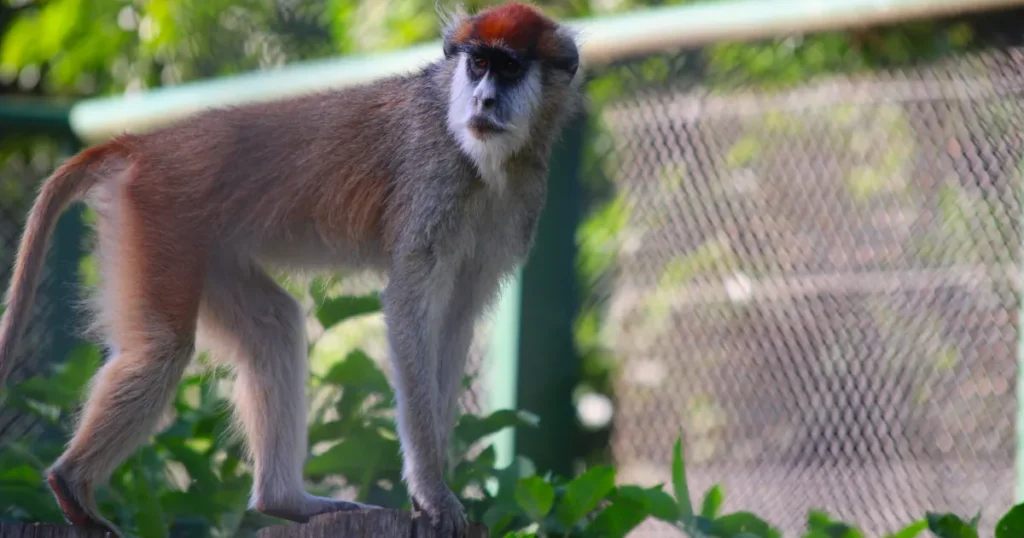
chimpanzee, black-and-white colobus, olive baboon, vervet monkey, red-tailed monkey, blue monkey, among others.
Birds in Murchison Falls park
Murchison Falls in Uganda is home to over 556 bird species. This conservation area has swamps, forests, savanna, and water bodies. It provides a great habitat for land and water birds. The Murchison Falls-Albert Delta wetland is a Ramsar site in Uganda. It’s also an Important Bird Area (IBA). This area in Murchison Falls National Park covers 17,293 hectares. It is vital for water birds like pelicans, herons, whale-headed storks, and darters.
Many birds in Murchison appear on the (IUCN) Red List. Some rare species include the Pel’s Fishing Owl, the Shoebill, and the Saddle-billed Stork.
Transcontinental birds like the Yellow Wagtail and Osprey come from Europe. They visit between November and April to escape the cold weather.
Here are some birds you might find in Murchison Conservation Area:
- Common Buzzard
- Caspian Plover
- African Palm Swift
- Western Yellow Wagtail
- Grey Crowned Crane
- Bronze Mannikin
- Rüppell’s Starling
- Rock Pratincole
- Western Cattle Egret
- Fulvous Whistling-Duck
- White-faced Whistling-Duck
- Little Swift
- White-winged Black Tern
- Helmeted Guinea Fowl
- Red-headed Quelea
- White-backed Vulture
- African Sacred Ibis
- Speckled Mousebird
And many more!
Fish in Murchison
Murchison Falls is Uganda’s top national park, offering a unique safari experience. Sport Fishing along the Nile River.
Key fish species include:
- Catfish
- Nile perch
- Angara (Alestes baremoze)
- Lungfish
- Moonfish
- Tigerfish
- Butterfish
The Nile perch is particularly impressive, weighing up to 200 kg (440 lbs).
Fishing costs 50 USD per person, per day. Tourists can also join Murchison Falls Fishing Tournaments. Fish in the park grow fast due to the plentiful food and controlled fishing.
Reptiles
Murchison is also home to reptiles, including snakes, lizards, and large Nile crocodiles. This park has the highest concentration of Nile crocodiles in Africa.
Crocodiles of all sizes stay near the base of Murchison Falls. They feast on animals swept downstream. Others are along the banks of the Victoria Nile, especially on the northern side.
Top 10 Attractions
Attractions in Murchison Falls National Park are endless. The top places to visit in this attractive national park include:
- Murchison Falls
- Paraa
- River Nile
- Heart of Murchison
- Albert Delta
- Karuma Falls
- Buligi Peninsula
- Rabongo Forest
- Budongo Forest Reserve
- Kaniyo Pabidi Forest
Murchison Falls Park Safari
Murchison Falls in Uganda is a thrilling spot for safari tourists. This popular national park attracts visitors from all over the world. An African safari in Murchison includes
- Game drives,
- Boat cruises,
- Sport fishing,
- Cultural tours,
- Nature walks,
- Birding and
- Chimpanzee trekking.
Murchison Park is home to a vast ecosystem. Tourists can enjoy many activities here. They can visit Murchison Falls, the oldest national park in Uganda.
A thrilling Murchison Falls safari lasts a few days. But you can choose to stay as long as you like in this popular national park in Uganda. The shortest time one can spend in this national park is a 2-day Murchison Falls safari. A 3-day Murchison Falls safari is the most common option. Whereas a 4-day Murchison Falls safari is the best.
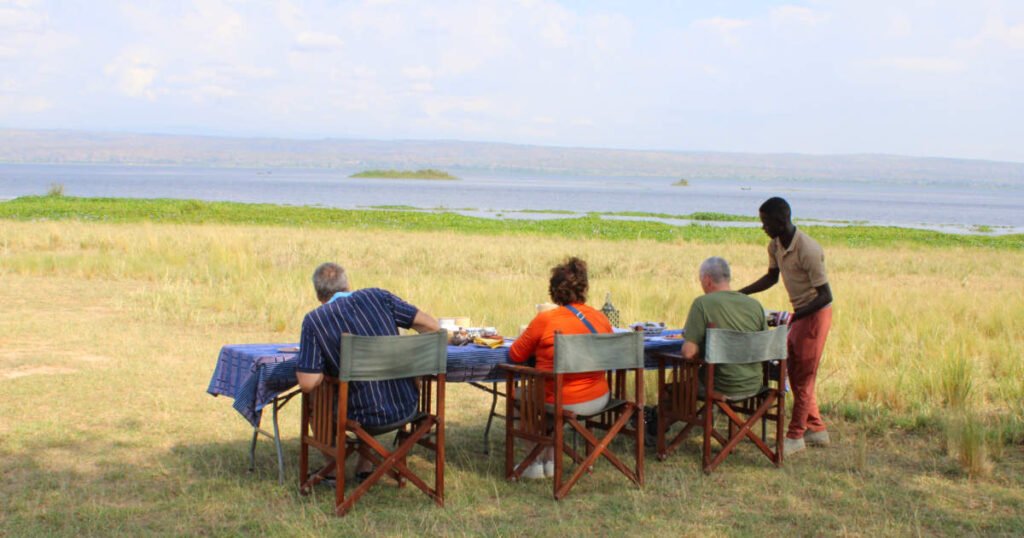
A typical 3-day Murchison Falls safari in Uganda starts with a drive to the conservation area. On day 1, you’ll stop at Ziwa Rhino Sanctuary for a nature walk to see rhinos. After meeting rhinos in Uganda, your safari guide will take you to the heart of Murchison. Then, you’ll visit the top of the falls.
You can cross the Nile by ferry in the evening. This way, you can settle in early for the morning game drive at Murchison National Park. In the afternoon, one can opt for a boat trip to the Albert Delta or a boat safari to the top of the falls. On the third day, guests can head home feeling cheerful after a fun trip to Murchison Falls.
When to Visit?
December, January, February, and July are the driest months. March to June and August to November are the wettest months in Murchison Falls. The temperature in the national park ranges from 18°C to 32°C.
The best time to visit Murchison Falls is year-round. The national park enjoys a hot and humid climate.
Murchison’s weather is great for game drives. Most visitors prefer the dry season over the wet season. The dry season brings water shortages. Animals have no choice but to gather at the few available water sources to drink and wallow.
Parks near Murchison Falls National Park
Traveling to Murchison Falls usually includes other Uganda safaris. These often feature national parks like
Kidepo Valley National Park, located north of Murchison Falls Park, is also worth visiting.